


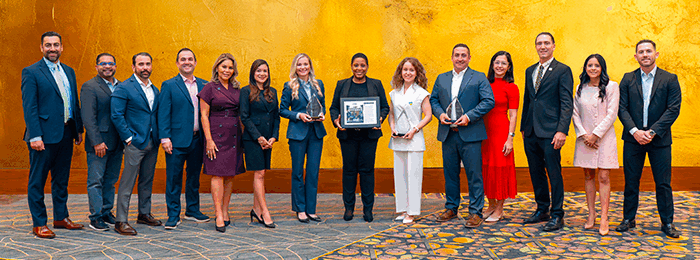







The ACAMS Germany Chapter made significant strides in 2024 and 2025, expanding its activities and broadening its community engagement. Over the course of two years, the chapter hosted 10 in-person networking events in Berlin and Frankfurt, alongside 10 online webinars with flexible access for professionals across Germany and internationally.
With the expansion of its board, the chapter proudly hosted its first local networking event in Munich, complementing ongoing engagements in Berlin and Frankfurt. In addition to events, the chapter introduced monthly lunchtime working groups—dedicated forums for discussing key topics in regulatory compliance and counter-terrorist financing (CTF).
Besides the regulatory topics discussed with government officials during our knowledge sharing events over the course of the past two years, our chapter focused on AI and crypto risk, discussed typologies around sanctions and terrorist financing including relevant case studies and showcased innovative approaches for transaction monitoring. The following are summaries of the events, and a list of our sponsors and speakers.
Regulatory overview
April 2024: Zeitenwende (turning point) in the fight against financial crime
Efforts to reshape the regulatory approach to combating financial crime have been advancing both internationally and nationally. Across the EU and within Germany, various initiatives have been set in motion to align with the requirements of supervisory authorities, obliged entities and law enforcement in a coherent and coordinated manner.
The first in-person event of 2024 hosted by the ACAMS Germany Chapter provided a comprehensive overview of recent regulatory developments, the evolving expectations for obliged entities, and emerging models for national and international public-private partnerships. The discussions focused on building an effective framework for the prevention of financial crime through collaboration among all key stakeholders.
High-level speakers shared their perspectives on the current state of reform, offering valuable insights from the viewpoint of legislators, the financial intelligence unit (FIU) and supervisory authorities.
Terrorist financing topics
2024 and 2025: Webinar series—terrorist financing risk in Europe
Senior industry experts explored the methods used by terrorists and extremists to raise and transfer funds within and across organizations.
- The first webinar examined the role financial institutions (FIs) can play in developing and implementing effective measures to prevent terrorist and extremism financing and provided concrete examples to illustrate current threats.
- The second webinar of the same series discussed the threat level for terrorism in Germany and how political and religious extremists finance their activities and how the FIU is responding. It also called for an examination of the strategies the financial sector must adopt to effectively counter the financing of terrorism, how academic research contributes to this effort as well as the role of FIs in disrupting extremist financial flows and the regulatory challenges institutions face in implementing effective countermeasures.
- In the third webinar, Dr. Hans-Jakob Schindler examined the financial mechanisms that Hamas has established to raise and transfer funds through the Western financial system. He also outlined practical measures FIs can adopt to identify and disrupt these illicit flows. The presentation included an overview of Hamas’ financial networks, the misuse of charities and nonprofit organizations, the role of cryptocurrency and digital finance, money laundering techniques and the challenges of detection, the use of social media and online platforms for fundraising, the impact of Western sanctions and enforcement actions, as well as future trends and emerging threats.
- The fourth seminar discussed the risks attached to the ever-growing risk of right-wing extremist financing.
- The fifth seminar focused on crypto-related typologies and warning signs that help identify suspicious activity, the travel rule and its impact on compliance whereby the experts shared obfuscation methods such as cross-chain bridges and mixing—and showed how these can nonetheless still be traced. Connections to sanctions and tax evasion were also discussed.
- The sixth and final webinar of this series focused how the German FIU works and provided insights into its analytical approach and how data, reports and intelligence are turned into actionable leads highlighting how the FIU connects with counterparts worldwide to trace illicit flows across borders.
Sanctions
March 2024: Sanctions due diligence and sanctions risk mitigation
This webinar featured insights from sanctions specialists. It began with an overview of the latest expectations around goods-related due diligence, followed by a case study illustrating sanctions due diligence in practice. The session provided participants with practical guidance and a list of key red flags to support more effective compliance and guidance on how to conduct enhanced sanctions due diligence.
September 2024: Sanctions and export controls—Hot topics and latest developments impacting European FIs and businesses
A panel of experts examined recent developments in sanctions and export controls, focusing on how current regimes are shaped, monitored and used as instruments of policy influence.
The discussion highlighted increased coordination between government and industry, as well as the significant risks organizations face when breaching these measures. Recent events and enforcement actions were explored to provide financial crime professionals with practical insights.
AFC and AI
June and October 2025: Combating financial crime and the role of AI
The ACAMS Germany Chapter hosted two events on the topic of AI in 2025, one focusing on the benefits of explainable AI in the context of anti-money laundering (AML) and fraud prevention. Key topics included the challenge of managing nontraditional payment flows while ensuring compliance with frameworks such as the travel rule/FATF-16, and the growing role of AI in supporting FIs’ AML and anti-fraud strategies. The discussion highlighted that technology should not replace human judgement but rather enhance the effectiveness of compliance programs by improving efficiency and decision-making. An important point raised was the ethical and regulatory implication of AI deployment.
February 2025: Increasing complexity, AI and the role of the MLRO
Another event that was hosted in early 2025 discussed the benefits and limitations of AI in AML using concrete examples to exemplify what already works today and how best to implement AI.
Risk assessment
December 2024: Risk analysis and risk assessment
This event brought together leading experts from the finance, technology and advisory sectors to examine both existing and emerging legal and regulatory requirements and to discuss practical solutions for addressing the associated challenges.
Attendees were offered in-depth insights into how national and international FIs are approaching the topic of risk assessment. One particular topic of discussion was the alignment of risk tolerance with regulatory expectations.
Crypto assets and AML
July 2025: Understanding blockchains and crypto-assets tracing
Attendees were introduced to core concepts and current challenges in combating money laundering and terrorist financing involving digital assets, supported by a range of real-world case studies. Given that financial flows are increasingly concealed, transaction patterns are technically complex and beneficial ownership structures are often anonymized or deliberately obscured, the session offered practical insights into how illicit activities are detected and traced on-chain, equipping professionals with tools to navigate the emerging risks.
September 2025: Crypto under fire—Disrupting terror financing
This webinar introduced key concepts and challenges in combating money laundering and terrorist financing in the digital asset space, featuring a wide range of real-world case studies. Attendees were provided with valuable insights into how illicit activities involving crypto-assets are detected and traced on the blockchain, equipping participants with practical knowledge and tools for navigating money laundering/terrorist financing risks in this area.
Transaction monitoring
May 2025: Ownership and controllers—From shell companies to money mules
The event provided insights into tackling complex ownership structures and the pervasive risk posed by shell companies. The session was structured around two real-world case studies, offering attendees practical engagement with current challenges in financial crime detection. Strategies to reveal and mitigate the specific risks associated with the use of shell companies in illicit finance were offered.
October 2025: Transaction monitoring
Practical perspectives on how innovation shapes—and sometimes complicates—the fight against financial crime were discussed. The speakers shared lessons learned from real-world struggles in aligning anti-financial crime initiatives with operational realities as well as insights into process engineering approaches that streamline and strengthen AML frameworks. The promises and limitations of agentic AI in addressing the false positives challenge were also addressed focusing on the evolving interplay between human expertise and intelligent systems in financial crime prevention.
A big thanks goes out to our sponsors: Commerzbank, AML RightSource, msg for banking ag, Protiviti, Hawk, SONABS, LexisNexis, ALL AML, Nexi and Moody’s—and to our media partner the Compliance Channel. We would also like to thank our speakers listed below.
- Marcus Pleyer, deputy director general, Federal Ministry of Finance in Germany
- Daniel Thelesklaf, head, FIU Germany
- Marco Zwick, director, Commission de Surveillance du Secteur Financier in Luxembourg
- Jürgen Repolusk, head of Analysis Unit, FIU Germany
- Lora von Plotz, head of AML Supervision of Payment Institutions, BaFin
- Nico Di Gabriele, senior team lead, European Central Bank
- Marco Pellicciari, senior supervisor, European Central Bank
- Nadja Long, legal officer, European Space Agency
- Blake Pritchett, senior advisor for Threat Finance and Sanctions, U.S. Department of State
- Hans Jakob Schindler, senior director, Counter Extremism Project
- Hans-Georg Beyer, chief compliance officer, Commerzbank Gruppe
- Albrecht Küstermann, compliance counsel, Commerzbank AG
- Bina Lehmann, director, financial crime risk manager, Deutsche Bank AG
- Mehmet Aydoğdu, executive vice president, chief compliance officer, legalcounsel/attorney at law, Yapi Kredi Deutschland
- Simone Pintus, director, senior financial crime prevention officer, risk assessment coordinator, UBS Europe SE
- Mark Welge, senior compliance manager, VR Payment
- Barbara Bayer, lawyer, CMS Deutschland
- Verena Horne, senior consultant, Berlin Risk Advisors GmbH
- Denis Lippolt, director, Segment Lead Risk Analytics und Model Risk, Protiviti
- Naidira Alemova-Goeres, board member, ACAMS Germany Chapter
- Maximilian Riege, chief risk officer, Hawk
- Emanuel Gedeon, executive partner, msg for banking ag
- Bernhard Janischowsky, CEO, Trestle Consulting
- Mark Sully, managing director, EMEA, AML RightSource
- Patrick Bowe, senior director, Product Solutions, AML RightSource
- Eve Whittaker, market planning director, LexisNexis
- Tassilo Amtage, director, EY
- Vlada Tkach, managing partner, Berlin Risk
- Hermann Wennekers, director, Wennekers Consulting
- Dr. Frank Passing, CEO, Fairfield & Archer
- Bo Fota, founder, SONABS
- Francis Marinier, financial crime prevention industry practice lead (EU), Moody's
- Franziska Toensing, data scientist, Deutsche Bank
- Mauro Halve, head of compliance, Amdax
- Edwin Oloo, associate director, segment lead, AFC analytics, Protiviti GmbH
- Georgi Kordinov, head of compliance and AFC, Nexi Germany
- Wolfgang Berner, co-founder and chief product officer, Hawk AI GmbH
- Naidira Alemova-Goeres, board member, ACAMS Germany Chapter
- Cornelia Tomczak, ACAMS Germany Chapter regional liaison director,
director, segment lead, Compliance, Germany, Protiviti - Jennifer Hanley-Giersch, ACAMS Germany Chapter regulatory director,
managing partner, Berlin Risk/ALL AML
For additional information on the ACAMS Germany Chapter, membership details and upcoming events, please visit our webpage at https://www.acams.org/en/chapters/europe/germany-chapter or email the chapter directly at germanychapter@acams.org.
Details of the ACAMS Germany Chapter’s activities since 2016 can be found at https://www.acamstoday.org/topics/all-topics/chapter/germany-chapter/.
Jennifer Hanley-Giersch, CAMS-Audit, managing partner, ALL AML GmbH, Berlin, Germany, Jennifer.hanley@allaml.eu, 


