

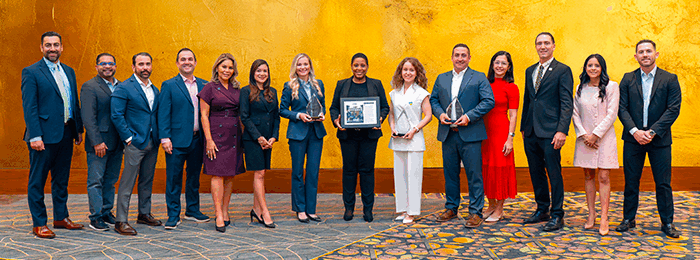





On September 29, 2025, the ACAMS Malta Chapter held an engaging webinar on professional money launderers (PMLs), “Professional Money Launderers: Methods, Trends and Detection.” This article will explore how PMLs exploit financial systems, the common methods they use and how to detect them.
PMLs are experts―either as an individual or a group―who carry out money laundering as a service to criminal organizations. They may provide an “A to Z” money laundering system for organized crime networks or a tailor-made money laundering scheme for specific criminals. The biggest difference between money launderers and PMLs is that PMLs offer this as a service, often with a fee or a “cut,” while money launderers launder their own illicit gains.
The services offered can be a combination of legal and illegal structures, and when combined, these allow PMLs to clean the money for their clients. These services often include terrorist financing and evasion of international sanctions. Depending on the expertise and experience of the PMLs, these services can be offered as either a “degustation menu” or an “a la carte menu.”
The Financial Action Task Force (FATF) has published a document titled “Professional Money Laundering,” which highlights the importance of PMLs. In this document, FATF makes a distinction between PMLs and professional money laundering organizations (PMLOs), as shown in Graphic 1.1

PMLs exploit the weaknesses and deficiencies in the financial system to offer their laundering services. They study and analyze the legal loopholes between jurisdictions and the gaps in financial entities’ control mechanisms (i.e. reporting thresholds, transaction monitoring controls, know your customer-due diligence requirements) and use financially complex structures (i.e. trusts, front or shell companies, shadow directors) and frequent movement of funds (i.e. cross-border transactions) to abuse the global financial system.
PMLs are aware that financial institutions work on control mechanisms, which often require certain rules, scenarios and thresholds to detect suspicious transactions. They misuse the products to launder the funds while avoiding detection by the financial entities and regulators. A PMLO may often include a legal consultant, an accounting professional and several intermediaries in cross-border jurisdictions.
A typical Black Market Peso Exchange Money Laundering scheme shows how these PMLO structures operate. Bulk cash couriers collect drug proceeds in the U.S. The collected funds
are laundered through local businesses. Business owners accept the cash from drug proceeds as payment for merchandise to be exported to businesses in Mexico. Then Mexican businesses
transfer pesos to people in Mexico who were affiliated with cartels. This allows the cartels to launder drug proceeds without physically transporting cash across the U.S.-Mexico border.
PMLs often employ the same successful laundering schemes repeatedly but also explore new methods. While trade-based money laundering is a common method, recent emerging trends include virtual assets and crypto transactions. This is due to the fast, immediate ability of these payment chains to move the funds with lesser scrutiny than the traditional payment methods. During the webinar, Dr. Arda Akartuna shared interesting examples of how PMLs use virtual assets and crypto transactions to launder illicit gains.
Detection is the key to preventing the global financial system to be used and abused by these professional service providers. It requires a set of precautionary measures, starting from the
top (i.e., the regulators) to the bottom (at entity level). These precautionary measures include but are not limited to regulatory guidance and training, sharing of intelligence between the regulators/law enforcement and obliged entities, entity-level transaction and transactional behavior controls and sound knowledge of the customers. Regular anti-money laundering/counter-terrorist financing training will assist obliged entities to enhance their knowledge by detecting red flags in their day-to-day operations.
Listed below are some links to interesting guidance and publications to read more on this subject.
- “FATF Report: Professional Money Laundering,” Financial Action Task Force, https://www.fatf-gafi.org/content/dam/fatf-gafi/reports/Professional-Money-Laundering.pdf
- “Resources,” The Wolfsberg Group, https://wolfsberg-group.org/resources
- “The Downfall of Dark Bank, the Organized Crime ‘Banker’ Who Allegedly Helped Launder Over €1 Billion,” Le Monde, https://www.lemonde.fr/en/les-decodeurs/article/2025/01/10/the-downfall-of-dark-bank-the-organizedcrime-banker-who-allegedly-helped-launderover-1-billion_6736919_8.html
- “Lack of City of London Oversight Hurting Efforts to Halt Dirty Money, FCA Warns,” The Guardian, https://www.theguardian.com/business/2024/sep/23/concerns-lack-of-city-of-london-oversight-hurting-efforts-to-halt-dirty-money
- Jake Bernstein, “The Laundromat: Inside the Panama Papers Investigation of Illicit Money Networks and the Global Elite,” WH Allen, 2019
Kadir Serkan Gurbuzoglu, CAMS, Advanced CAMS-RM, MLRO, Garanti BBVA Malta Branch, ACAMS Task Force member, ACAMS Malta Chapter, director of Programming and Sponsorship, Serkangur@garantibbva.com.tr, 
Deborah Cassar, CAMS, Advanced CAMS-RM, associate director, KPMG Malta, ACAMS Malta Chapter co-chair, DeborahCassar@kpmg.com,
Andrew Mackay, independent AML/CTF/CPF consultant and trainer, freelancer, ACAMS Malta Chapter co-chair, intelligence@threatfinance.net,
- “FATF Report: Professional Money Laundering,” Financial Action Task Force, July 2018, https://www.fatf-gafi.org/content/dam/fatf-gafi/reports/Professional-Money-Laundering.pdf
- Ibid