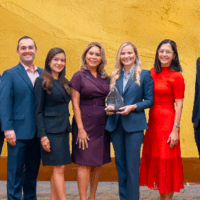

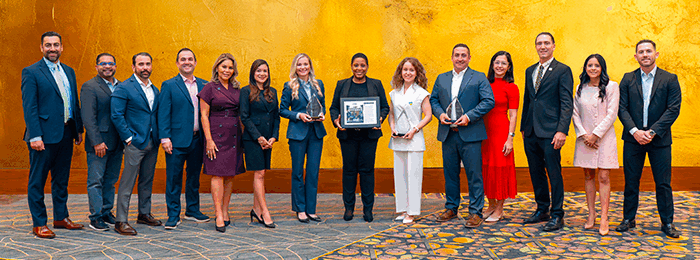






On September 29, 2025, the ACAMS South Florida Chapter convened financial crime professionals, law enforcement (LE) officials, survivor advocates, technology leaders and students at Florida International University in Miami for a full day of learning and collaboration focused on combating human trafficking (HT). Sponsored by Block, Quantexa, RedCompass Labs and Cygnus Compliance, the training emphasized survivor-centered education and the critical role financial institutions (FIs) play in detecting and disrupting exploitation.
The program opened with Alex Sardinas, South Florida Chapter board member, who set the tone for the day by underscoring the importance of collective action. Mariah Gause, ACAMS’ chief operating officer, welcomed attendees and highlighted the organization’s mission to equip compliance professionals with the knowledge and partnerships needed to confront global financial crimes. Their remarks reminded participants that FIs are front line in identifying patterns of exploitation that may otherwise go unseen.

The survivor’s voice
Bekah Charleston, an HT survivor and advocate, shared her personal story and the enduring impact of trafficking. She delivered a resonant message: “Discipline without relationship leads to rebellion.” Her presentation reframed the issue from an abstract compliance concern into a human reality that leaves measurable traces across legitimate financial systems.
Charleston described how traffickers manipulate bank accounts, payroll structures and payment channels to control victims and conceal illicit gains. Her insights encouraged participants to view transactional data through a human lens, recognizing that every anomaly might reflect coercion or abuse. As Charleston powerfully stated, “If you don’t know your value, then anyone can dictate it to you”―a reminder that effective anti-trafficking work begins with empathy, awareness and the ability to see beyond the numbers.

LE collaboration in focus
The next session brought together representatives from federal LE and the financial sector for a moderated discussion on the realities of investigating HT cases that intersect with legitimate business operations. The conversation was moderated by Hank Hernandez, who guided an engaging exchange focused on practical collaboration and investigative challenges.
The panel provided an inside view of how trafficking networks often conceal illicit activity behind lawful commercial structures. Speakers emphasized that cooperation between financial institutions and investigative agencies is essential for disrupting organized trafficking operations. Investigators rely on timely and detailed suspicious activity reports to uncover networks, while compliance teams depend on LE insights to strengthen their detection and monitoring models.
The discussion reinforced the importance of shared intelligence, open communication and mutual trust. By aligning investigative strategies with financial data analysis, both sectors can identify and dismantle trafficking enterprises with greater precision and impact.

Film, reflection and discussion
The program continued with a documentary focused on survivor rehabilitation and systemic challenges related to detection and reintegration. Daniella Trinchet, ACAMS South Florida Chapter board member, led a post-film discussion with representatives from RedCompass Labs and Quantexa.
The dialogue centered on translating awareness into action. Participants reflected on how survivor-informed perspectives enhance institutional training and how typology-based learning helps compliance teams recognize vulnerabilities that traffickers exploit. The conversation reinforced that understanding the lived experience of survivors should inform both investigative practice and monitoring design.
Typology review: Red flags and real-world risk
In the afternoon, Elena Sutton, ACAMS South Florida Chapter’s co-chair, introduced the final session led by RedCompass Labs and Quantexa. This session connected human experience to financial data, demonstrating how typologies and analytics can reveal the hidden mechanics of trafficking.
According to RedCompass Labs’ and Quantexa’s joint research, an estimated 50 million people are trafficked worldwide today―10 million more than five years ago. Traffickers generate roughly $350 billion in annual profit. Less than 1% of those illicit proceeds are ever recovered. The figures reveal the global scale of exploitation and the difficulty of tracing proceeds once they enter legitimate systems.
The presenters organized their findings into two primary categories of typologies: labor trafficking and commercial sex trafficking.
Labor trafficking indicators:
- Businesses showing unusually low payroll costs or inadequate employment tax payments relative to operations;
- Frequent or rapid cash withdrawals through check-cashing outlets;
- Shared ownership of multiple companies across unrelated sectors;
- Payments to overseas employment or recruitment agencies; and
- Repeated adverse media references or labor and safety violations.
In South Florida, labor trafficking often appears in agriculture, construction, hospitality and personal care services. Many of these enterprises seem legitimate on the surface, yet their financial footprints tell a different story. Unexplained payroll discrepancies, missing tax contributions and irregular cash movements can all signal the presence of forced labor.
Commercial sex trafficking indicators:
- Business registrations or transactions connected to massage parlors, bars or clubs that also appear on commercial sex advertisement platforms;
- Payroll levels inconsistent with business volume;
- Business websites or promotional content inconsistent with licensed services; and
- Customer payments recorded outside standard operating hours.
By mapping these indicators, RedCompass Labs and Quantexa demonstrated how compliance teams can refine monitoring models to detect recurring behavioral patterns. Such approaches reduce false positives and make it easier to identify organized trafficking networks that use legitimate business structures to hide exploitation.
Beyond data: Addressing structural challenges
The session also addressed systemic barriers that make trafficking difficult to detect. Data on HT remains fragmented across jurisdictions, with limited sharing between LE, FIs and nongovernmental organizations. Monitoring systems originally designed for fraud or money laundering often fail to identify the fluid typologies associated with trafficking.
A related concern involves returning traffickers, individuals who resume operations under new business names or affiliations after legal intervention. Without integrated data and entity resolution tools, institutions can overlook links between previous offenders and newly formed entities.
To address these gaps, RedCompass Labs and Quantexa advocated for contextual-based monitoring, a method that combines typology-driven indicators with network analytics. By integrating transactional, credit and behavioral data, institutions can score activity according to risk appetite and escalate alerts based on contextual evidence. The approach transforms static monitoring into an intelligence-led process that adapts to evolving risk.
Technology and the human imperative
While technology advances detection capability, it cannot replace human understanding. Effective monitoring requires trained professionals who can interpret nuances and connect data to real-world behavior. Participants discussed how survivor-informed education, typology training and cross-sector collaboration all contribute to a more complete understanding of trafficking risk.
The presenters concluded that progress against trafficking depends on three principles: accurate data, collaborative intelligence and continuous training. Analytical tools can surface indicators of exploitation, but without human context, even the most advanced systems fall short.
A day of shared responsibility
As the event drew to a close, the atmosphere reflected determination and shared purpose. The South Florida Chapter’s decision to bring together survivors, investigators, technology specialists and financial professionals demonstrated the value of multi-disciplinary learning and empathy-driven leadership.
Across every session, one message remained consistent: Fighting HT is a collective responsibility. Each suspicious activity report, payroll review or vendor assessment represents a potential intervention point. Every compliance decision carries human weight, and every act of vigilance has the power to disrupt exploitation.

Continuing the mission
The ACAMS South Florida Chapter’s HT training affirmed that awareness must evolve into sustained action. The collaboration between Block, Quantexa, RedCompass Labs, Cygnus Compliance, the FBI and the United States Postal Inspection Service exemplified how public and private sectors can transform knowledge into prevention.
As participants left Florida International University, the day’s message remained clear―the fight against HT begins not only with analytics and technology but with empathy, curiosity and the professional responsibility to look closer at what financial behavior might conceal.
Elena Sutton, MBA, CAMS, ACAMS South Florida co-chair, senior manager, Crowe LLP, Miami, FL, USA, Elena.Sutton@Crowe.com, 
Alejandro (Alex) Sardinas, CAMS, CCAS, ACAMS South Florida Chapter co-treasurer, vice president, Regulatory Risk Optimization manager, Ocean Bank, Miami, FL, USA, asardinas@oceanbank.com,