
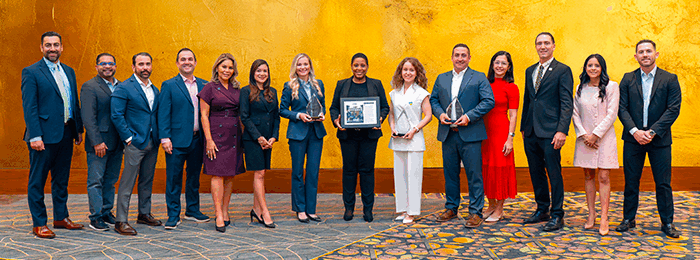







AFC Professional of the Year Award
Matthew Haslinger, CAMS, is an executive vice president and the chief Bank Secrecy Act/anti-money laundering (BSA/AML) and sanctions compliance officer at M&T Bank. Haslinger is the co-chair of the ACAMS Greater Buffalo Chapter. He started his AML career with U.S. Department of Justice’s Money Laundering and Bank Integrity Unit as a senior trial attorney where he was involved in the investigation and prosecution of complex, national and international money laundering, as well as sanctions-related matters.
In 2012, Haslinger returned to his hometown, Buffalo, New York, to become the head of the financial investigations unit at M&T Bank. He later took on the role of BSA/AML officer for M&T Securities Inc.
In 2020, Haslinger was appointed chief BSA/AML officer for M&T Bank. In this position, he is responsible for oversight, implementation and strategic direction of the enterprise-wide programs for AML, BSA and governmental sanctions compliance. He is an active member of ACAMS. He is a Certified Anti-Money Laundering Specialist (CAMS) and a licensed attorney in Virginia and New York.
ACAMS Today (AT): Congratulations on receiving the ACAMS Professional of the Year Award for 2025! Please share some professional achievements of which you are particularly proud.
Matthew Haslinger (MH): First off, thank you to ACAMS for this award. I’m truly humbled to be recognized among all the incredible anti-financial crime (AFC) professionals in our industry. I’ve been fortunate to work with inspiring AML professionals throughout my career, and the achievements I’m most proud of reflect what we accomplished together in service to our communities. As a federal prosecutor for the Department of Justice (DOJ), I was part of a team that brought one of the first indictments of an individual under Title 31 for Willfully Failing to Maintain an Effective AML Program―an important step in holding individuals accountable and advancing the integrity of the financial system. That experience reinforced for me how critical collaboration is between law enforcement (LE), regulators and financial institutions (FIs). At M&T Bank, I’m proud to have helped lead the development of our BSA program and fostered a culture of compliance that empowers our employees to protect not just the bank but the communities that we serve from financial crime. None of this happens in isolation―it requires strong partnerships, shared values and a commitment to doing the right thing together. Looking back, I see a common thread: Good AML compliance means not just following the law but protecting people.
AT: What drew you to the area of money laundering and sanctions as a trial attorney?
MH: My interest in financial crimes goes back to my father, who is a retired IRS Criminal Investigations Division special agent. His stories of pursuing complex money laundering cases and seeing how financial evidence could expose hidden wrongdoing inspired me early on. That foundation drew me to the DOJ, where I realized how powerful financial investigations are in uncovering hidden conduct, protecting the public and holding criminals accountable. What I found most compelling was the intersection of law, policy and community impact―how pursuing financial crime isn’t just about cases, but about safeguarding trust in the system. That perspective made moving into AML compliance work a natural extension of my legal career. It allowed me to take the investigative instincts I had developed and apply them at my hometown bank, helping to identify crime as it's occurring and providing highly useful intelligence to LE, even before it gets to prosecution. In many ways, this path has been about honoring the example my father set while building my own approach. Combining my legal background with a mission I deeply value has been both challenging and rewarding, and it continues to drive me every day in the work I do.
AT: Can you tell us about your experiences in your various roles at M&T Bank?
MH: M&T has given me the opportunity to serve in a variety of leadership roles across AML, BSA and sanctions compliance. Each step has deepened both my knowledge and my appreciation for the importance of this work. I have focused much of my career at M&T on scaling programs to not only meet but anticipate regulatory expectations, while also enabling the bank’s growth. None of that progress would have been possible without my incredible team. I’ve had the privilege of working with some of the most talented professionals in the industry, people whose dedication, creativity and ability to solve complex problems are the foundation of our program’s strength. Over time, my role has evolved from building frameworks and processes to fostering a culture of accountability, innovation and collaboration. I’ve learned that true leadership in this space is about creating the conditions where others can thrive―empowering people to bring forward their best ideas, making sure diverse voices are heard and aligning our shared purpose around protecting the bank and our customers. What I am most proud of is not just the programs we’ve built, but the culture we’ve built together―one that is resilient, forward-looking and deeply committed to making a difference.
AT: How has your background as an attorney shaped your role as an AFC professional?
What I am most proud of is not just the programs we’ve built, but the culture we’ve built together―one that is resilient, forward-looking and deeply committed to
making a difference
MH: Being an attorney trained me to think critically, frame issues clearly and anticipate how regulators might view a situation. That mindset has been invaluable in compliance, where the risks are complex and decisions must stand up to scrutiny. My legal background also helps me balance competing considerations―regulatory expectations, operational realities and business objectives―while ensuring we maintain the highest standards of integrity. In practice, this means I’m often translating legal and regulatory language into actionable guidance for the business, helping teams understand not just what the rules are, but why they matter. In addition, the discipline of legal analysis has sharpened my ability to spot patterns, identify gaps and ask the right questions―skills that are essential in detecting and preventing financial crime. Whether it’s reviewing a suspicious transaction or designing a control framework, I try to approach each challenge with a mindset rooted in risk awareness, accountability and a commitment to doing what’s right.
AT: You were a panelist and moderator at The ACAMS Assemblies in Las Vegas and Hollywood this year. How long have you been participating in The Assembly program and what do you think The Assemblies have to offer AFC professionals?
MH: I love The Assemblies! They’re truly unique in the AFC space. I’ve been fortunate to participate in the program for several years now, and each time I walk away energized by the depth of dialogue and the diversity of perspectives. What sets The Assemblies apart is their focus on real-world application. It’s not just about theory or policy―it’s about hearing directly from peers who are in the trenches, solving the same challenges you face. Whether it’s navigating emerging risks, implementing new technologies or responding to regulatory shifts, the sessions are grounded in practical experience. The networking is unmatched. You’re not just meeting people―you’re building relationships with professionals from across the globe who are passionate about fighting financial crime. That kind of community is invaluable, especially in a field where collaboration and shared intelligence are key to staying ahead. And perhaps most importantly, The Assemblies offer actionable takeaways. You leave with ideas you can implement immediately to strengthen your program―whether it’s a new control, a fresh approach to training or a way to enhance your risk assessments. For any AFC professional looking to grow, stay current and connect meaningfully with others in the field, The Assemblies are a must.
AT: What are the most pressing developments you have seen emerging during the past year in the AML and sanctions spaces?
Stay curious, keep learning and never lose sight of the mission
MH: One of the most significant shifts I feel like we’re seeing is the convergence of traditionally distinct risk and compliance domains―AML, fraud, cyber risk and consumer protection―into a more integrated risk landscape. This isn’t just a theoretical alignment; it’s being driven by the realities of modern banking, where technology is accelerating the speed of transactions, customer interactions and threat vectors. Emerging technologies like real-time payments, AI-driven decision-making and digital onboarding have created incredible efficiencies―but they’ve also introduced new vulnerabilities. Fraud schemes are evolving rapidly, often exploiting gaps between siloed controls. Cyber threats are increasingly intertwined with financial crime, and consumer compliance risks can surface in areas like algorithmic bias or data privacy, which were once considered outside the AML scope. As a result, FIs are being pushed to break down internal silos and build more holistic compliance frameworks. The most effective programs now emphasize cross-functional collaboration, shared data intelligence and unified governance. It’s no longer enough to have strong AML controls in isolation―those controls need to work in concert with fraud detection systems, cybersecurity protocols and fair banking practices. This convergence is reshaping how we think about risk ownership, technology investment and regulatory engagement. It’s a challenging shift, but also an exciting one―because it opens the door to smarter, more resilient compliance programs that are better equipped to protect customers and institutions alike.
AT: Do you have any words of wisdom for professional growth that you would like to share with our readers?
MH: Stay curious, keep learning and never lose sight of the mission. AFC is a complex and demanding field, but it’s also one of the few professions where you can see the tangible impact of your work―protecting communities and safeguarding your company. One of the most powerful things you can do for your growth is to invest in your network. Surround yourself with people who challenge your thinking, share their experiences and push you to see problems from new angles. Seek out mentors but also be a mentor―there’s tremendous value in both learning and teaching. Don’t be afraid to raise your hand for the tough assignments. Growth rarely happens in comfort zones. The projects that stretch you, that force you to learn new skills or navigate unfamiliar terrain are the ones that shape your career. Whether it’s leading a cross-functional initiative, diving into a new regulatory framework or presenting to senior leadership―lean into those moments. And finally, remember that technical expertise is only part of the equation. Emotional intelligence, communication and integrity are just as critical. The best AFC professionals are those who can connect dots across disciplines, build trust across teams and stay grounded in the purpose behind the work.
Interviewed by Karla Monterrosa-Yancey, CAMS, editor-in-chief, ACAMS, editor@acams.org